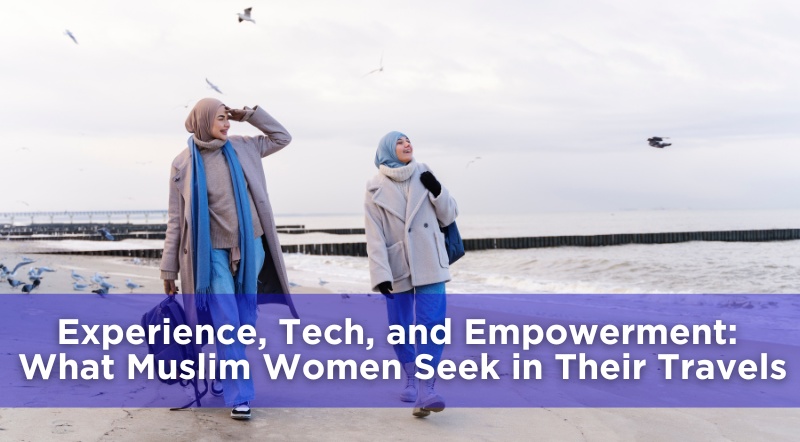
As the Muslim travel market continues its rapid expansion, Muslim women are emerging as a powerhouse demographic, making up 48% of global Muslim visitor arrivals by 2025. Their travel choices are no longer just about the destination; they are deeply rooted in intentionality, personal growth, and faith-alignment.
In commemoration of Mother's Day, this article will invite readers to further understand what Muslim women travelers actually seek in their travels and the trends that influence them.
Beyond Sightseeing: Sought-After Experiences
Muslim women travelers are seeking meaningful engagement that nourishes the mind, body, and soul. Across all age groups and personas, several key experiences have emerged as top priorities:
-
Shopping (74%): It remains the most popular activity, serving as a primary way to engage with global brands and local crafts. This experience is especially sought out by Muslim women traveling in female-only groups.
-
Cultural Immersion (72%): A high preference for deep dives into local traditions and authentic lifestyle experiences.
-
Learning Opportunities (66%): Many travelers prioritize educational journeys where they can acquire new skills or knowledge from their experience.
-
Adventure (62%): A surging interest in outdoor and high-energy activities that push personal boundaries and offer space for Muslim women to take a breath and reconnect with nature.
-
Special Events & Festivals (55%): Planning trips around cultural celebrations and significant global gatherings.
-
Spa & Wellness (33%): A growing focus on holistic health and spiritual renewal in private, faith-sensitive environments.
The Future of Travel: Key Trends & Highlights
The report identifies five transformative trends that are reshaping how Muslim women navigate the world:
1. The Era of Digitalization
Technology is the backbone of modern travel planning. 68% of respondents state that social media influences their travel decisions, with Instagram (40%) and YouTube (25%) being the leading platforms for gathering information and inspiration.
2. The Rise of Solo Travel
Solo travel is on the rise, with many women seeing it as more flexible compared to group or family trips. 35% of Muslim women now have willingness to travel solo, a significant increase from 28% in 2019. This trend is particularly strong among the younger generation, with 41% of solo travelers aged 18–24.
3. AI Agents as Personal Assistants
Artificial Intelligence is revolutionizing travel safety and efficiency. 93% of travelers trust AI for travel information, using AI agents for real-time safety assessments, Halal food verification, and hyper-personalized itinerary planning.
4. The “Woke” & Social-Conscious Traveler
A growing segment of young Muslim women prioritizes Regenerative Tourism. These travelers seek a "win-win" for both themselves and the locals, favoring women-led enterprises and community-based initiatives that align with their ethical values.
5. Inclusive by Design
Destinations are responding to the demand for privacy and comfort with inclusive-by-design facilities. Success stories include a women-only beach in Turkey (Golden Sand Beach) and hotel floors or spas entirely staffed by and purposed for women, allowing travelers to relax without scrutiny.
Ready to Navigate the New Frontier of Travel?
The 2026 landscape for Muslim women is defined by autonomy, technology, and a deep sense of purpose. Whether you are an industry stakeholder looking to adapt or a traveler planning your next adventure, the insights are clear: the future of travel is inclusive, digital, and empowered.
Download the Muslim Women in Travel 2026 Report here to understand more about Muslim women’s travel intent and enriching experiences.