In the rapidly evolving world of sports tourism, high-intent travel only converts into actual bookings when travelers feel certain their needs will be met. For the global Muslim market, this confidence is built when faith-based essentials, such as Halal food and prayer access are clearly defined and easily verified before any purchase is made. This is why if information is missing or inconsistent, destinations lose out on a vibrant audience, even when demand is at an all-time high.
How to Use the Playbook
The Delivery Playbook is designed to help stakeholders translate abstract inclusion standards into tangible operational delivery. It provides a roadmap to prioritize what to build, what to publish online, and which department must own the delivery. By following this structured approach, Muslim-friendly sports tourism becomes a repeatable, scalable, and globally competitive asset for any sports destination.
The "Proof Wins" Checklist
If a facility or service is not visible online, for the modern traveler, it effectively does not exist. Destinations should ensure the following proofs are published across official apps and websites:
-
Tickets: Official links, seating categories, venue map, and clear refund/resale policies.
-
Transport: Last-mile options, entry gate walking estimates, and accessibility routes.
-
Faith Essentials: Verified Halal dining locations and prayer space maps with wudu (ablution) guidance.
-
Logistics: Accepted payment methods (e-wallets, QR), fee transparency, and safety/emergency points.
-
Accessibility and Support: Step-free routes, accessible seating, helpdesk contact, and Muslim-friendly guides.
The RIDA Framework: Designing for Confidence
To ensure a "future-ready" experience, CrescentRating utilizes the RIDA Framework to structure destination readiness:
R – Responsible by Design
Responsibility in this market means sports event destinations must make prayer, Halal food, and dignity effortless by integrating them into the core operating model. This includes Muslim-ready on-ground standards, such as prayer spaces that can handle peak crowds and Halal assurance inside the venue. Accessibility is another component, with step-free route map, accessible seating details, and assistance service important for the disabled and older spectators.
Sites must show their readiness for prayer, Halal food, family zones, venue rules, accessibility, assistance service, and safety info as the minimum for Muslim travelers’ travel intent to convert into bookings.
I – Immersive Community & Belonging Experience
Shared culture and local Muslim experiences will drive repeat interest and social connection to Muslim travelers. To maximize this aspect, cities and destinations can amplify the Muslim crowds by sharing with them the faith-friendly attractions near the site, local stories and volunteer efforts, Muslim-owned and Halal restaurants nearby, and combine the sports itinerary with time with the local community.
For more thoughtfulness, destinations can create culturally connected contents by marking special times like Ramadan and Eid, and feature the Muslim community’s diverse perspectives.
D – Digital Journey Enablement
With the increasingly digitally-active Muslim sports travelers, it becomes very important for sports destinations to make "Proof Wins" clickable through the event app or official landing page that consolidates ticketing, mobility guidance, maps, real-time updates, and faith-ready info in one place.
This aspect is vital as it is the stage where Muslim travelers decide whether they want to spend their money to travel or not. Therefore, the accuracy and trustworthiness of the app or landing page is crucial as guests prefer official sources that can give them a trusted channel, safety cues, and payment clarity.
A – Assured Muslim-Friendly Standards
To appeal to Muslim travelers, sports destinations need to ensure that their standards are not just claims, but are delivered on-ground and proven through photos and verified listings. With CrescentRating’s standards, every venue needs to have Halal food service, prayer facilities, water-friendly washrooms, and assurance of no Islamophobia as the minimum faith-based needs for an enjoyable sports tourism experience for every Muslim traveler.
Tailored Playbooks for Every Stakeholder
1. Venue Management Playbook
Venues must focus on the physical environment. This includes providing designated prayer spaces that can handle peak volumes during overlapping prayer times and ensuring Halal options are available inside the venue, not just nearby. Staff should be briefed on Muslim-friendly essentials to assist with inquiries effectively.
2. Event Organizer Playbook
Organizers "own the journey" and must act as the single source of truth. This involves coordinating partners to ensure standardized wording for Halal and prayer claims. They are responsible for scheduling breaks that acknowledge prayer timing realities and providing secure, transparent digital ticketing pathways.
3. Destination, Hospitality, & Transport Playbook
The city-wide ecosystem must extend the venue experience into the streets.
-
Transport: Authorities should publish accessible last-mile routes and ensure signage is multilingual.
-
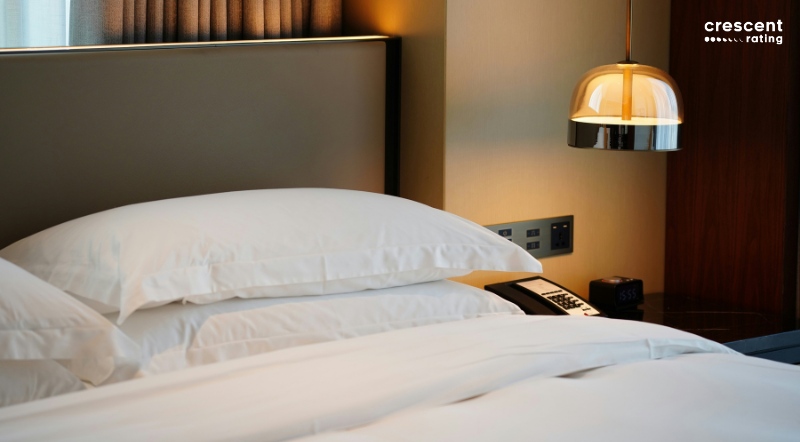
Hospitality: Hotels should offer "event-ready" bundles that include Halal breakfast options and Qibla (prayer direction) indicators in rooms.
-
Tourism Boards: Create a downloadable "Muslim-Friendly Event Guide" featuring Halal clusters and local mosque maps.
By shifting from simple slogans to visible strategy, your destination can engineer the confidence required to capture this high-growth market.
Find more detailed guides for your sports destination inside the full Mastercard-CrescentRating Muslim-Friendly Sports Tourism Report 2026!