
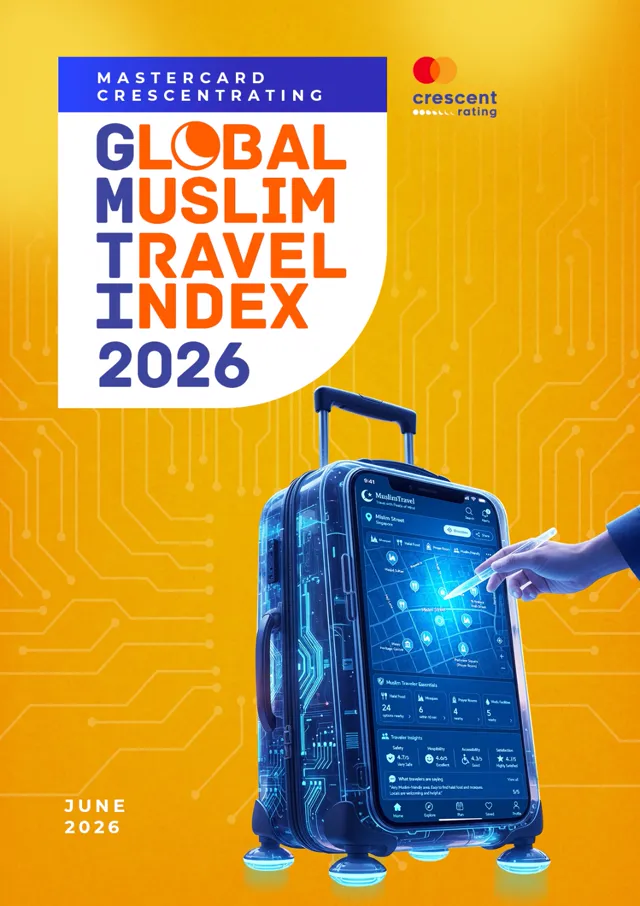

June 2026Market studies
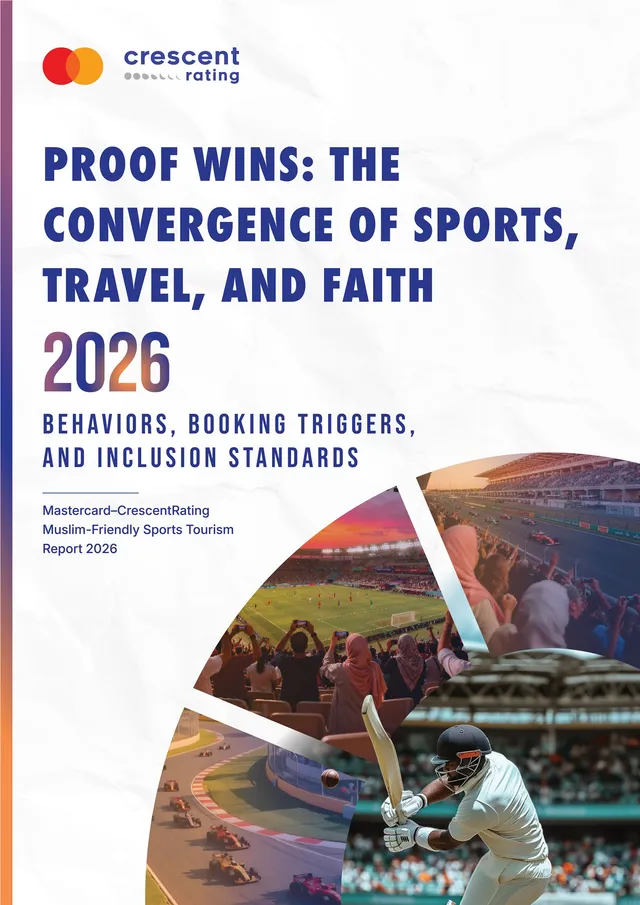
Muslim-Friendly Sports Tourism Report 2026
Muslim-friendly sports tourism: traveler demand, confidence in Halal food, prayer readiness, venue inclusion and the opportunities for destinations.
Explore the report
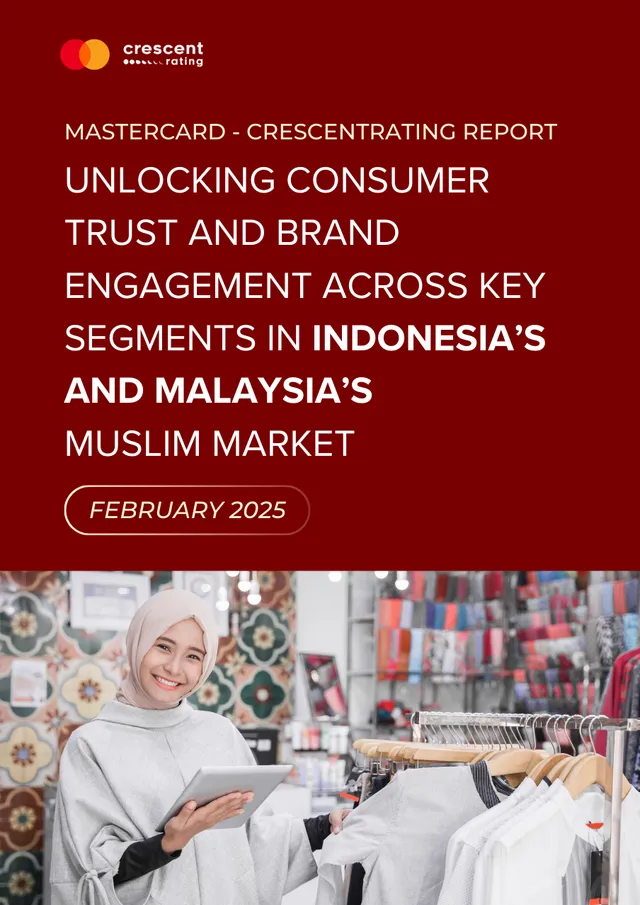
In February 2025, Mastercard and CrescentRating summarized two studies of how Muslim consumers in Indonesia and Malaysia choose, find and stay loyal to brands. About 90% of respondents in both markets said brands should respect faith traditions. Indonesians ranked quality first when choosing a brand; Malaysians ranked Halal assurance first.
About 90%
of respondents in each market said it is crucial that brands respect faith traditions and principles.
Indonesia & Malaysia Muslim Brand Engagement Report 2025, p. 14
4.6
Quality was Indonesians' top factor in choosing a brand, ahead of Halal assurance (4.4) and price (4.3), in average importance scores out of 5.
Indonesia & Malaysia Muslim Brand Engagement Report 2025, p. 13
4.8
Halal assurance was Malaysians' top factor, ahead of quality (4.7) and price (4.5).
Indonesia & Malaysia Muslim Brand Engagement Report 2025, p. 13
40%
of brand discovery responses in Indonesia named social media, against 26.2% in Malaysia.
Indonesia & Malaysia Muslim Brand Engagement Report 2025, p. 11
34.6%
of Indonesian respondents belonged to a brand loyalty program, against 66.7% in Malaysia.
Indonesia & Malaysia Muslim Brand Engagement Report 2025, p. 15
Over 65%
in both markets rated loyalty programs 4 or 5 out of 5 for influencing their purchases.
Indonesia & Malaysia Muslim Brand Engagement Report 2025, p. 15
The report counted approximately 266 million Muslims in Indonesia and Malaysia together, about 13% of the world's Muslim population, with a rising middle class in both. Figures as printed in February 2025.
| Measure | Indonesia | Malaysia |
|---|---|---|
| Muslim population | 243 million | 23 million |
| Share of the population that is Muslim | 87% | 67% |
| Areas with a large Muslim majority | 17 provinces more than 90% Muslim | 9 states and 2 federal territories more than 60% Muslim |
| Share of the global Muslim population | 12% | 1.1% |
| Share of Asia's Muslim population | 17% | 1.6% |
| Share of ASEAN's Muslim population | 86% | 8.2% |
| Muslims under 40 | 63% | 64% |
| Millennials | 25% | 27% |
| Gen Z | 24% | 23% |
| Gen Alpha | 21% | 19% |
| Male and female | 50.3% and 49.7% | 51% and 49% |
Indonesia & Malaysia Muslim Brand Engagement Report 2025, p. 7
The report calls quality, Halal assurance and price uncompromisable for consumers in both markets. Customer service, social responsibility, environmental sustainability and reputation add to a brand's appeal once those three are in place.
| Rank | Indonesia | Malaysia |
|---|---|---|
| 1 | Quality (4.6) | Halal assurance (4.8) |
| 2 | Halal assurance (4.4) | Quality (4.7) |
| 3 | Price (4.3) | Price (4.5) |
| 4 | Customer service | Customer service |
| 5 | Social responsibility | Environmental sustainability |
| 6 | Environmental sustainability | Social responsibility |
| 7 | Brand reputation | Brand reputation |
Average importance score out of 5, printed for the top three factors only; the report's charts list the rest in this order. Halal assurance is charted as Halal certification or Muslim-friendliness. Indonesia & Malaysia Muslim Brand Engagement Report 2025, p. 13
Consistency in quality scored highest for importance in driving loyalty. Consumers frequently switched brands for better quality and lower prices.
p. 9
Food and beverages scored highest for consumer engagement in both markets, followed by personal care products, which makes the category the prime one for loyalty programs.
p. 9, 10
In Indonesia, travel and recreation had the lowest engagement score of the six categories, which the report attributes to economic and seasonal factors.
p. 10
In Indonesia, satisfaction with how brands meet Muslim consumer needs was moderate, a gap between what consumers expect and what they get.
p. 14
Focus groups named cultural alignment, ethical practices, product quality and transparency as essential to building trust.
p. 9
Social media led brand discovery in both markets. Loyalty program membership was far higher in Malaysia than in Indonesia.
| Channel | Responses |
|---|---|
| Social media | 40% |
| Word of mouth | 22.5% |
| Online advertisements | 14.4% |
| In-store promotions | 11.8% |
| TV and radio advertisements | 9.5% |
| Print media | 1.8% |
Share of all discovery responses. Indonesia & Malaysia Muslim Brand Engagement Report 2025, p. 11
| Channel | Responses |
|---|---|
| Social media | 26.2% |
| Online advertisements | 21.6% |
| In-store promotions | 17.3% |
| Word of mouth | 14.2% |
| TV and radio advertisements | 13.3% |
| Print media | 7.3% |
Share of all discovery responses. Indonesia & Malaysia Muslim Brand Engagement Report 2025, p. 11
Social media and word of mouth dominated brand discovery in Indonesia. Malaysia showed a relatively even spread across social media, online advertising, in-store promotions, word of mouth and TV and radio.
p. 11
TikTok and Instagram were the preferred platforms for brand engagement in both markets. In Indonesia, YouTube, Facebook, Twitter (X) and LinkedIn followed; in Malaysia, Facebook made a larger contribution, ahead of YouTube, Twitter (X) and LinkedIn.
p. 12
| Respondents | Indonesia | Malaysia |
|---|---|---|
| Members of a brand loyalty program | 34.6% | 66.7% |
| Not members | 65.4% | 33.3% |
Indonesia & Malaysia Muslim Brand Engagement Report 2025, p. 15
Despite the gap in membership, over 65% of respondents in both markets rated loyalty programs 4 or 5 for their effectiveness in influencing purchases.
p. 15
Discounts and coupons were the most preferred loyalty incentives in both markets.
p. 9
The report advises brands to widen membership by making programs more visible, simplifying enrollment and stating the benefits clearly, and to tailor rewards through exclusive discounts, personalized deals or experiential rewards.
p. 15
Both studies centered on the Core Halal and Muslim-Friendly segments, and the report says the findings also apply to the Intrinsic Halal and Neutral segments.
Indonesia & Malaysia Muslim Brand Engagement Report 2025, p. 6
| Segment | What it covers | Examples |
|---|---|---|
| Intrinsic Halal | Products and services tied to faith traditions, values and rituals, which exist to support religious observance. | Hajj and Umrah travel, mosques and prayer facilities, Quran apps, religious education |
| Core Halal | Everyday products central to daily routines, where Halal assurance is essential. | Food and beverages, personal care products such as cosmetics and skincare, Islamic finance, pharmaceuticals |
| Muslim-Friendly | Products and services that need a level of Muslim-friendly assurance, such as Halal food options, prayer facilities, gender-sensitive services or modest attire. | Muslim-friendly travel and hospitality services such as hotels, modest fashion brands, wellness facilities with gender-sensitive options, family-oriented entertainment |
| Neutral | Products and services suitable for Muslim consumers without a specific emphasis on Halal attributes. | Technology (gadgets, software), furniture, home décor, office supplies, generic clothing items |
| Non-Halal | Products and services that conflict with Halal principles and are typically avoided by Muslim consumers. | Alcohol, pork products, gambling, entertainment that contradicts faith traditions |
Indonesia & Malaysia Muslim Brand Engagement Report 2025, p. 5
| Principle | What it means for a brand |
|---|---|
| T Transparency & Trustworthiness | Open practices in sourcing, ethical labor and sustainability, and open communication about brand ethics and values. |
| R Relevance to Faith & Culture | Halal and Muslim-friendly assurance, authentic representation of Muslim identity, and acknowledging Ramadan and Eid. |
| U Unwavering Quality | Consistent quality and reliability, with transparency about sourcing and ingredients. |
| S Social Connection | Engaging the Muslim community through influencer partnerships, local events or digital platforms. |
| T Thoughtful Rewards | Value-driven loyalty programs with discounts, personalized offers and options for charitable giving. |
The report's findings are brought together in the Muslim Consumer TRUST Engagement Matrix. Indonesia & Malaysia Muslim Brand Engagement Report 2025, p. 8, 16
“Halal assurance, cultural and faith alignment, and a commitment to ethical practices are no longer optional but essential to building trust and fostering loyalty.”
“Although Islamic finance and faith-compliant food and beverage are still the biggest drivers of the Halal economy, new sectors such as tourism, personal care, wellness, fashion, logistics, and pharmaceuticals are rapidly gaining ground.”
“Malaysia offers a more structured ecosystem with higher satisfaction levels in Halal compliance, loyalty engagement, and faith integration.”
June 2026Market studies
Muslim-friendly sports tourism: traveler demand, confidence in Halal food, prayer readiness, venue inclusion and the opportunities for destinations.
Explore the report
February 2024Market studies
Muslim cruise passengers from 2019 to 2027, a late-2023 survey on cruising and Halal cruises, the Genting Dream case study, and recommendations on the RIDA framework.
Explore the report
2020Market studies
This CrescentRating Pulse Report takes a snapshot of how mosques from over 60 destinations have responded to the COVID-19 pandemic. Through a global survey done from September to October 2020, findings from more than 400 respondents in 190 cities reveal a united global Muslim community working hand in hand with mosque leaders and the rest of the population to weather the pandemic storm.
Download the free PDF
Mastercard-CrescentRating, Indonesia & Malaysia Muslim Brand Engagement Report 2025
For interviews, data requests or research built around your destination or brand, our research team can help.