
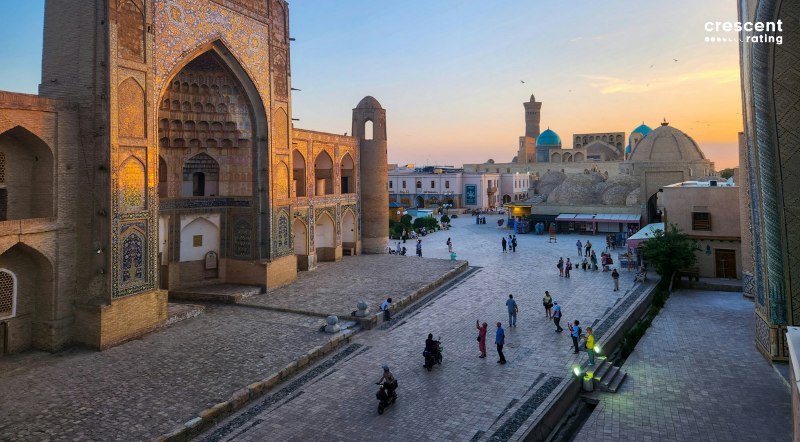
With the release of the 11th edition of the Mastercard-CrescentRating Global Muslim Travel Index (GMTI) 2026, our multi-part insight campaign comes to a close. Across this series, we have explored a decade of ranking shifts, deep-dived into sovereign benchmarks like Malaysia and Singapore, unpacked the Proximity Pivot driving regional mobility, and confronted the algorithmic reality facing tourism boards worldwide.
As a final wrap-up for the GMTI 2026 Campaign, this article synthesizes the current state of the global Muslim travel market and outlines the strategic frontiers that will define the sector's next chapter.
The Current State: An Unstoppable Economic Powerhouse
The foundational finding of GMTI 2026 is that faith-compatible travel has permanently outgrown its legacy classification as a niche market. It is now a primary, mainstream economic growth engine for global destinations. The number goes from 176 million arrivals in 2024, 196 million arrivals in 2025 (+11.3% YoY Surge), to a horizon target of 262 million arrivals in 2030.
This rapid acceleration is backed by an unyielding demographic engine. The global Muslim population is expanding toward 2.57 billion by 2036 (encompassing 28.8% of humanity). With a median age of just 25-27 years, approximately 70% of this population are digitally native consumers under the age of 40.
Furthermore, outbound demand is structurally de-concentrating. In 2019, the top 30 outbound source markets held an 88% monopoly on travel spend. By 2026, that concentration has dropped to 77%, reflecting the emergence of vibrant diaspora communities and middle-class travelers across new, globally distributed source markets.
GMTI 2026 Leaderboard: The Core Benchmarks
The 2026 rankings evaluated 150 benchmarked destinations representing over 98% of global Muslim arrivals across the quantitative ACES Framework (Access, Communications, Environment, Services):
OIC Leaders

Malaysia retains its undisputed #1 global ranking for the 11th consecutive year. Indonesia achieved a historic performance surge (+3 points) to climb into a joint #2 ranking alongside Saudi Arabia and Türkiye. Qatar attained the #5 spot, followed by the UAE, Bahrain, Iran, Kuwait, and Oman.
Non-OIC Pioneers

Singapore maintains its unbroken lock on the #1 Non-OIC position (and #10 globally overall). Hong Kong secured the #2 Non-OIC position following government-led hotel and transit accreditation, while Taiwan and the United Kingdom share the #3 spot. The Philippines registered the highest index momentum shift with a +5 score surge.
What Comes Next: The 4 Strategic Frontiers Reshaping Travel
As destinations look beyond 2026, four structural shifts will dictate market share and capital allocation:
Frontier 1: Live Algorithmic Visibility (The AI Mandate)
With 80% of global travelers actively utilizing AI tools to plan and delegate travel decisions, physical service availability is no longer enough. If a hotel or destination’s faith-based assets are not structured, machine-readable, and contextually discoverable, automated AI travel agents will bypass them entirely. Through diagnostic tools like the AI Recommendation Readiness Auditor (AIRA) and the upcoming LLM Readiness metric in GMTI 2027, the battle for consumer capture has shifted to the algorithmic layer.
Frontier 2: De-Averaging the Audience (MWIT & Sports Tourism)
Destination planning can no longer treat Muslim travelers as a uniform block.
-
Muslim Women in Travel (MWIT): Currently 90 million strong (accounting for 48% of global arrivals), female Muslim travelers dictate travel decision-making and demand safety, privacy-conscious wellness, and digital discovery.
-
Sports Tourism Capitalization: Driven by digitized youth, the Muslim sports-event travel market is projected to reach USD 21 billion by 2030. Intent converts to ticket sales only when organizers provide verified proof of faith essentials (prayer spaces, Halal dining, alcohol-free blocks).
Frontier 3: Navigating Volatility & Home-Continent Mobility
Macroeconomic stress, fuel cost volatility, and geopolitical friction have established proximity risk as a primary booking filter. Rather than canceling trips, travelers are adjusting behaviors by trading unpredictable cross-continental routes for safer short-haul corridors in their home-continent. Southeast Asia has emerged as a top operational corridor for inbound stability, while Mediterranean safe havens like Spain and Bosnia capture more European outbound flows.
Frontier 4: Enterprise Activation via the Destination Activation Stack
To bridge baseline infrastructure with real-world conversion, future-proof destinations are adopting the Destination Activation Stack:

By layering qualitative refinement (Responsible, Immersive, Digital, Assured) and transactional trust signals (Transparency, Relevance, User Experience) over the quantitative ACES baseline, destinations eliminate booking leakage and build macro-ecosystem resilience.
From Baseline Readiness to Enterprise Execution
As travel discovery moves from active search to AI agent delegation, and as consumer expectations shift toward personalized, values-aligned experiences, the destinations that succeed will be those that integrate physical hospitality with live digital trust. By investing in structured data, universal accessibility, and resilient regional corridors, global tourism stakeholders can future-proof their strategies and build a truly welcoming travel landscape for all.
Download the full Mastercard-CrescentRating Global Muslim Travel Index 2026 Report here.