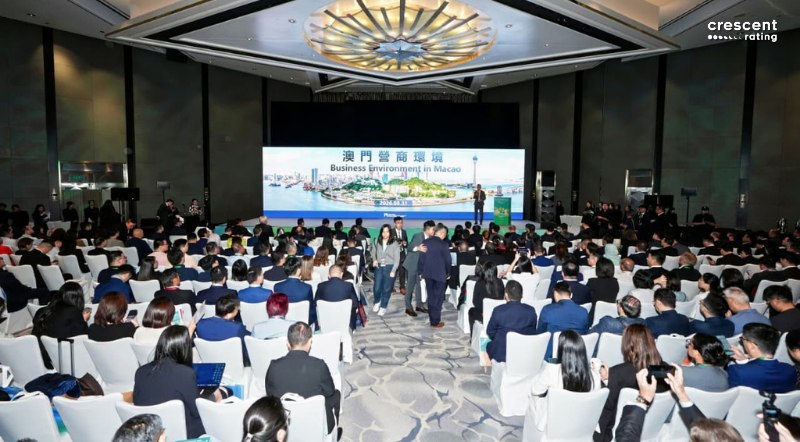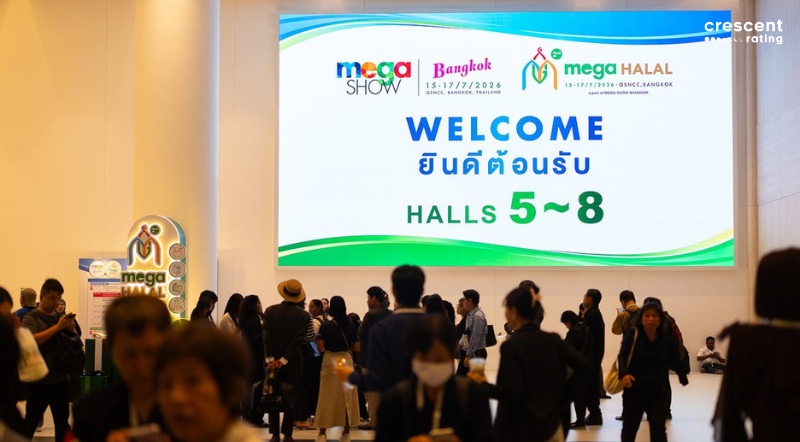

At the Halal in Travel Global Summit (HITGS) 2026, global travel minds gathered to unpack a powerful structural milestone: a Muslim visitor economy registering 196 million international arrivals and scaling aggressively toward a USD 310 billion spend pool by 2030. During this landmark event, industry visionaries highlighted that as smartphone ubiquity scales past an 80% usage across all phases of the traveler journey, a deeper psychological and technological shift is underway: the transition into agentic travel, trust automation, and digital delegation.
As articulated at the summit by Fazal Bahardeen, CEO of CrescentRating and HalalTrip, the competitive landscape has permanently shifted from static physical availability to live algorithmic visibility. Backing this perspective during his keynote address, Rafat Ali, Founder and CEO of Skift, noted that with a massive young Gen Z cohort researching and deciding entirely online, the connected Muslim traveler is no longer an emerging segment—it is the mainstream. Together, their insights underscored that Artificial Intelligence is no longer a superficial marketing feature; it is actively building a new "Halal Operating System" transforming global mobility.
The Cognitive Evolution: From Fragmented Search to Automated Trust
Historically, planning a faith-compatible itinerary required significant cognitive strain and fragmented coordination. Independent travelers, solo women, and multi-generational family groups had to spend hours manually cross-checking food verification boards, locating proximity-aligned prayer spaces, and reviewing community forums to confirm local safety indicators.
During the HITGS 2026 discussions, it was emphasized that the new AI-powered Halal Operating System completely re-engineers this timeline by replacing active data compilation with predictive, pre-validated delegation:
-
End-to-End Itinerary Curation: Advanced Large Language Models (LLMs) and context-aware AI assistants can instantly ingest consumer psychographics to structure highly personalized multi-destination plans.
-
Frictionless Dietary and Spiritual Mapping: AI systems natively layer localized Halal culinary networks, verified prayer facilities, and gender-sensitive privacy infrastructure directly into real-time transit schedules.
-
Mitigating Vulnerability on the Ground: By transforming unverified destination claims into real-time, context-aware utility, automated assistants clear away traveling anxieties, changing uncertainty into on-demand confidence.
The Mandate for Stakeholders: Static Availability vs. Algorithmic Visibility
This shift in traveler behavior introduces a critical reality check for tourism boards, destination management organizations (DMOs), and hospitality brands. As Rafat Ali sharply pointed out to the summit delegates, destinations must adapt the digital journey entirely or run the immediate risk of losing the booking.
Fazal Bahardeen further framed this challenge around data trust: while a destination may possess award-winning Halal restaurant chains, step-free transit corridors, or premium private resorts, an unstructured digital footprint will keep those assets hidden from intelligent search agents. Because AI intermediates the modern travel timeline, any property or destination data that cannot be cleanly parsed by an LLM will be systematically excluded from automated recommendation loops. To survive this disintermediation, global tourism entities must transition away from analog marketing formats and upgrade their technical architecture to be machine-readable.
Global Benchmarks of the New AI Ecosystem
Several forward-thinking destinations highlighted at the summit are already demonstrating how to operationalize advanced technology to drive tangible operational impact and optimize flow:
Saudi Arabia
Effectively deploys sophisticated AI-powered crowd management frameworks alongside biometric-enabled checkpoints to secure seamless and predictable gateway experiences for millions of multi-generational spiritual travelers.
Singapore
Integrates advanced agentic AI models within secure cloud computing environments, enabling public sector systems to deploy automated tourism agents that speed up service and create hyper-personalized itineraries while protecting user data.
Indonesia
The Ministry of Tourism has deployed MaiA (Meticulous Artificial Intelligence of Indonesia) directly into its official framework, anchoring early-stage destination discovery with a personalized, data-driven companion.
Türkiye
iGA Istanbul Airport offloads 40% of routine on-site wayfinding bottlenecks directly to an interactive Augmented Reality (AR) digital assistant, radically minimizing transit friction and cognitive strain.
Qatar
Qatar Airways maps customer relationships across both inspirational and functional touchpoints by launching Sama 2.0, the world’s first conversational, live AI digital concierge interface.
Optimizing for Next-Generation Data Trust
The current state of the global Muslim traveler dictates that convenience, data transparency, and machine-readability are no longer optional add-ons—they are core components of global tourism resilience. As the insights from HITGS 2026 prove, to successfully convert rising consumer intent into realized bookings, the global travel industry must align with this cognitive automation shift. The destinations and brands that successfully build out their digital data trust networks upstream will command unshakeable loyalty and leadership in the era of agentic travel.
Watch the session and discover more on how AI is building the new Halal operating system here and how it is important for the current muslim travelers here.