
The global Muslim travel landscape is experiencing an undeniable shift toward hyper-personalized, mobile-first, and values-driven experiences. At the center of this transformation is an unyielding demographic engine: Generation Z. Combined with Millennials, this cohort under the age of 40 represents roughly 70% of the global Muslim population, serving as the primary driver of modern international travel demand.
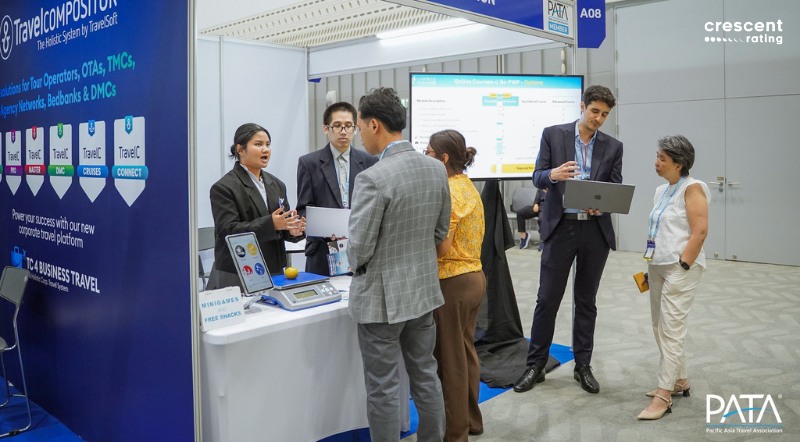
At the Halal in Travel Global Summit (HITGS) 2026, a dynamic panel of next-gen Muslim voices and content creators—Khalil Wahid, Jasmine Tay, and Benazio Putra—came together to dissect this cultural shift. The panellists made it clear that tourism boards and hospitality brands must look past traditional, rigid travel packages and design for a unique blend of digital fluency, ethical awareness, and deep cultural intentionality.
The Intentional Spender: Unpacking Sustainability and Social Responsibility
The panel opened with a deep dive into the psychology of the young Muslim traveler, shattering the myth that Gen Z values low costs above all else.
"We aren't just passive tourists checking boxes off a bucket list," noted Khalil during the discussion. "A staggering 77% of Muslim Gen Z travelers identify as intentional spenders who are willing to allocate higher budgets toward verified sustainable and ethical practices. For us, how we spend our money is an extension of our faith and values."
The panel analyzed how this ethical framework directly shapes journey mapping:
Conscious Transit Choices
Nearly a third of Gen Z travelers are actively willing to alter their transit habits to minimize their environmental footprint. This includes 11% who look for direct premiums for carbon offsets and 14% who choose destinations closer to home to avoid long-haul emissions.
Impact-Driven Itineraries
Social justice and communal accountability carry massive weight, with 76% indicating that supporting local social causes is a non-negotiable element of their travel planning. This translates into a strong demand for volunteer tourism and hyper-local independent businesses.
Cultivating Authenticity: The Demand for Cultural Immersion
The speakers uniformly rejected the appeal of isolated, generic resort experiences and highly predictable, curated sight-seeing tours. In fact, demographic data shared during the session revealed that only 1% of Gen Z travelers opt for traditional group tour packages, preferring absolute autonomy instead.
"Gen Z travels for self-actualization and personal development," Jasmine Tay mentioned. "Close to 70% of us express a clear preference for deep cultural immersion—we want to experience authentic local traditions, community heritage, and regional cuisines alongside the people who live there."
The panel highlighted that for 63% of this demographic, travel functions as an educational catalyst; an intentional space to acquire a new skill, discover localized history, or broaden cross-cultural understanding.
The Digital Blueprint: Frictionless Ecosystems and Algorithmic Visibility
As true digital natives who research, validate, and book entirely online, Gen Z delegates travel complexity to advanced digital networks.
"Friction is the ultimate booking killer for our generation," warned Benazio Putra. "Whether it's logistics or payments, everything needs to be seamless. Around 73% of us are highly inclined to utilize cashless payment infrastructure, preferring debit, credit, or mobile wallet networks over traditional currency exchanges."
The panelists emphasized that their discovery process is heavily dictated by high-visual networks like Instagram, TikTok, and YouTube. On these platforms, unassailable, visible proof of faith essentials—such as verified Halal dining and accessible prayer spaces—must be contextually clear during the early planning stages. For global operators, this means that simple physical availability is no longer enough; success depends entirely on machine-readable algorithmic visibility.
Female Decision-Makers and Changing Group Dynamics
The demographic data highlights an important shift in gender roles within family and community structures. Gen Z Muslim women have firmly emerged as primary drivers of destination choice and expenditure planning, with over 70% heavily involved in managing and coordinating travel logistics for their families.
Concurrently, there is an accelerating growth curve in independent all-female friend groups and solo female travelers across non-OIC markets, indicating that a destination's verified score in personal safety, street security, and zero faith-based restrictions acts as a critical, front-end booking filter.
Actionable Mandates for Global Operators
The final verdict of the HITGS 2026 panel was definitive: the future of worldwide tourism cannot be decoupled from ethical citizenship, seamless connectivity, and personal integrity. For tourism boards and hospitality brands looking to unlock this massive market, the mandate is clear: adapt to the digital and sustainable expectations of these young digital natives or risk complete disintermediation. Brands that openly display sustainable practices, respect cultural identity, and structure their data for seamless mobile discovery will capture the unshakeable loyalty of this defining generation.
Are you ready to adapt your destination's digital journey for next-generation traveler discovery? Optimize your destination today here.