The global Muslim travel segment has officially transitioned from a specialized niche into a mainstream economic powerhouse. According to the latest data from the Mastercard-CrescentRating Global Muslim Travel Index (GMTI) 2026, international Muslim arrivals reached 196 million in 2025—a solid 11.3% year-on-year increase that signals a vast, expanding global base. As the sector marches toward a projected 262 million arrivals and an estimated USD 310 billion annual expenditure by 2030, global competition among destinations has reached an all-time high.
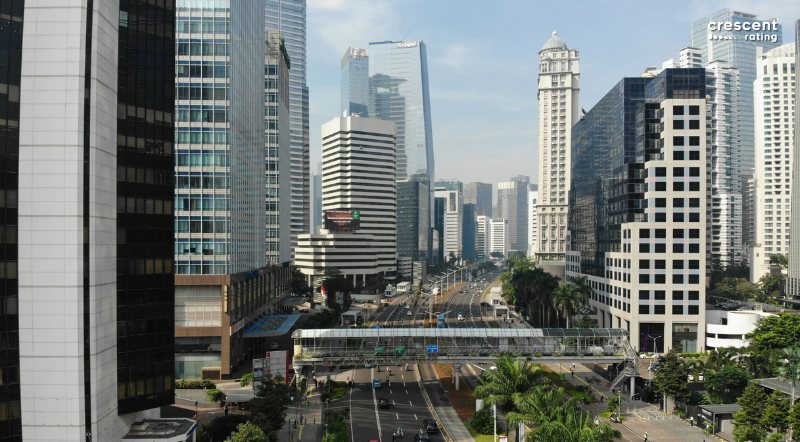
At the center of this year's index results is a story of strategic resilience: Indonesia's bounceback. After a brief drop in the rankings following expansive infrastructure pushes from competing destinations, Indonesia engineered a powerful recovery, climbing three spots to proudly share the #2 global ranking with Saudi Arabia and Türkiye.
Understanding the Benchmark: The ACES Framework
To evaluate how effectively 150 global destinations represent and serve the faith-based market, the GMTI relies on its foundational blueprint: the ACES Framework. Established in 2017, this framework standardizes over 60 quantitative datasets to measure a destination’s readiness across four key pillars:
-
Access (10%): Measures cross-border corridor readiness, focusing on visa facilitation, electronic visa processing speeds, flight connectivity, and internal transport links.
-
Communication (20%): Evaluates language proficiency, digital outreach, targeted destination marketing, and general stakeholder awareness.
-
Environment (30%): Examines the macro-ecosystem, tracking public safety, universal travel accessibility, sustainability initiatives, and the absence of faith restrictions.
-
Services (40%): Focuses heavily on ground-level amenities, specifically the accessibility of certified Halal dining options, dedicated prayer facilities, Muslim-friendly hotel ecosystems, and Islamic heritage experiences.
The Rank Drop of 2025: A Wake-Up Call in a Volatile Market
Indonesia's path to the upper echelons of the 2026 index was not without hurdles. In the 2025 index, Indonesia experienced a rank drop, slipping down to the 5th position.
This temporary decline did not reflect an internal deterioration of Indonesia's assets; rather, it was a direct consequence of a highly dynamic and increasingly aggressive global market. Powerful Organization of Islamic Cooperation (OIC) players—most notably Saudi Arabia, Türkiye, and Qatar—poured immense capital into upgrading their digital entry networks, streamlining visa procedures, and centralizing their smart tourism architecture.
At the same time, the global travel footprint began experiencing a structural de-concentration. Historical data showed that the top 30 outbound source markets previously commanded 88% of concentrated share; by 2026, that consolidated block diffused to 77%, meaning destinations were suddenly forced to compete for a much broader, more globally distributed traveler profile. This rank drop served as a stark reminder that physical availability alone was no longer enough to secure a top-tier market position.
The Big Comeback: Unleashing a +3 Point Surge
Indonesia’s response to the 2025 rankings was a multi-layered institutional push. Registering a +3 point score surge, Indonesia climbed back to claim a shared second place on the global leaderboard with a score of 79.

This remarkable recovery was driven directly by coordinated efforts among key travel, hospitality, and sharia economy stakeholders:
Centralized AI Discovery Ecosystems
The Ministry of Tourism moved swiftly to capture the under-40 digital native demographic—who represent nearly 70% of the market—by introducing MaiA (Meticulous Artificial Intelligence of Indonesia). Accessible directly on the official national tourism platform, this conversational companion provides personalized itineraries and helps travelers discover pre-validated faith-friendly services early in the upstream planning cycle.
-
Elevating Stakeholder Awareness: Indonesia maximized its domestic market alignment by expanding premier nexuses like the Indonesia Sharia Economic Festival (ISEF). Launched by Bank Indonesia, ISEF has grown into a massive international platform. In its recent iterations, the event drew a staggering 444,000 attendees across four cities, successfully driving grassroots business awareness, scaling Halal culinary integration, and embedding cultural authenticity into the commercial tourism ecosystem.
-
Dismantling Infrastructure Friction: Ground-level connectivity upgrades—such as the widespread implementation of e-visas and automated biometric gates at Soekarno-Hatta International Airport—sharply reduced wait times while enhancing border confidence and universal accessibility scores.
Strategic Lessons for Other Global Destinations
Indonesia’s quick turnaround offers a practical blueprint for global tourism boards and hospitality chains looking to optimize their positions within the GMTI Performance Matrix:
-
Physical Assets Must Meet Algorithmic Visibility: Indonesia recognized that modern traveler behavior has evolved from active web searches to digital delegation. If a destination's certified dining, lodging, and airport prayer facilities are not formatted as machine-readable data, they risk exclusion from automated AI recommendation loops.
-
Execute a Two-Speed Demographic Strategy: Successful destinations must build data-driven, high-tech frameworks for digitized youth (ages 21-30) while simultaneously providing universally accessible universal design frameworks to capture the expanding senior traveler demographic.
-
Insulate Against Regional Volatility: Real-world macroeconomic pressures—including fuel price volatility and airspace restrictions—have turned proximity risk into a major booking filter, shifting demand heavily toward safe, stable home-continent options. Destinations can capture displaced travel traffic by proactively publicizing their security records, safety sub-scores, and low-friction entry pathways in real time.
The Future-Proof Blueprint
Indonesia’s triumphant return to the second spot on the GMTI 2026 index proves that destination excellence can never be static. In an era of intense market competition, continuous technological advancement, and unpredictable global corridors, long-term market share belongs to the agile. By harmonizing physical infrastructure with government-led digital ecosystems and continuous stakeholder training, Indonesia has safely future-proofed its visitor economy, setting a gold standard for faith-aligned tourism worldwide.
Learn more about Indonesia’s rise on the global Halal tourism market in the Mastercard-CrescentRating Global Muslim Travel Index 2026 Report here.